
Business Networking For Dummies
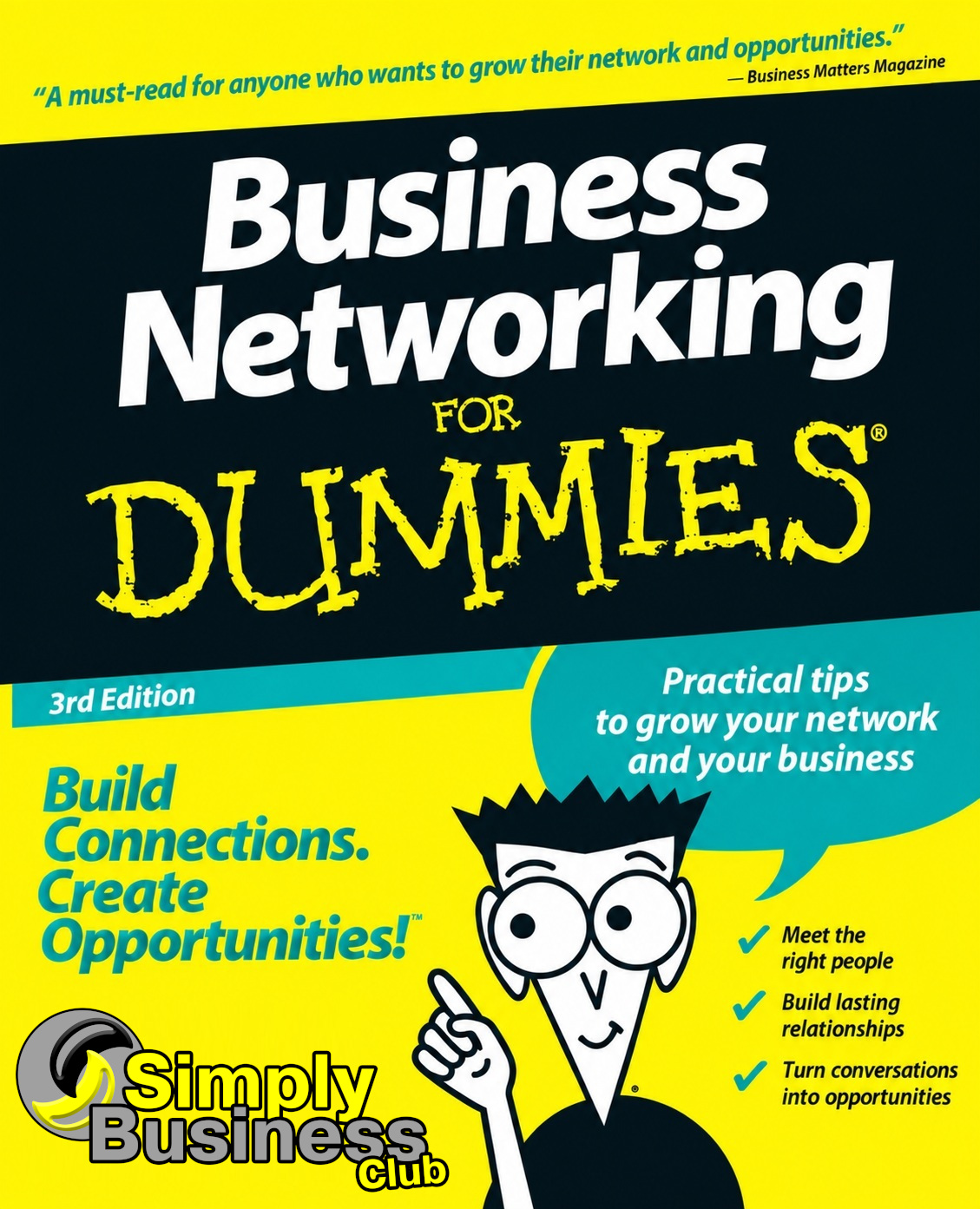
Business Networking For Dummies
A Simple, No-Nonsense Guide to Making Connections, Building Relationships and Getting More From Business Networking
Business networking can sometimes appear far more complicated than it actually is.
What should you say when you introduce yourself? Who should you talk to? Should you take business cards? How do you approach someone you’ve never met? What happens if you forget someone’s name? How quickly should you follow up? And, perhaps most importantly, how do you turn all those conversations into genuine business opportunities?
If you’ve ever asked yourself any of those questions, welcome to Business Networking For Dummies – our straightforward guide to becoming a better business networker without needing to become the loudest, most confident or most sales-driven person in the room.
The good news is that successful business networking isn’t about learning clever sales techniques or perfecting a thirty-second performance. It’s primarily about meeting people, having conversations, listening, building trust and gradually developing professional relationships.
At Simply Business Club, this relationship-led approach sits at the heart of our networking philosophy. Our meetings encourage conversation, collaboration and knowledge sharing, giving people the opportunity to properly discuss their businesses rather than simply firing a quick sales pitch at the room.
So, in the spirit of those famous beginner-friendly guides, we’re going back to basics.
No complicated networking theories. No confusing terminology. No requirement for a degree in small talk.
Just practical advice to help you walk into your next business networking meeting knowing what to do.
Chapter One: What Exactly Is Business Networking?
Let’s begin with the obvious question.
What is business networking?
At its simplest, business networking is the process of meeting and developing relationships with other business owners, professionals and organisations.
Those relationships could eventually lead to customers, referrals, suppliers, partnerships, collaborations, recommendations, advice, introductions or opportunities you couldn’t necessarily have created by yourself.
The important word here is relationships.
Networking isn’t simply walking into a room containing twenty potential customers and attempting to sell something to all of them. In fact, somebody you meet may never personally buy anything from you.
But they might know someone who will.
They could recommend a supplier, introduce you to a potential client, invite you to an event, tell you about an opportunity or become a valuable professional contact for many years.
Simply Business Club describes business networking as a way to recognise and create opportunities, share information, find potential partners and establish business relationships.
That’s a much better starting point than:
“Who can I sell to today?”
Chapter Two: You Don’t Have to Be a Natural Networker
One of the biggest misconceptions about networking is that you need to be naturally outgoing.
You don’t.
You don’t have to walk into the room shouting hello to everybody, dominate every conversation or become the person everyone notices immediately.
Some excellent networkers are quieter people.
Why?
Because they listen.
They ask thoughtful questions. They remember details. They take an interest in other people’s businesses and make connections between the people they meet.
If you’re nervous about attending your first networking event, give yourself a very simple objective.
Talk to one person.
Introduce yourself and ask them what they do.
That conversation will probably lead naturally to another question and another answer. Somebody else may join you, or the person you’re speaking to might introduce you to someone.
Congratulations.
You’re networking.
Chapter Three: Know What You Do
This might sound ridiculous.
Surely everyone knows what their own business does?
Of course they do.
The problem is explaining it clearly to someone who knows absolutely nothing about it.
When you’re surrounded by your own industry every day, it’s easy to use terminology, abbreviations and jargon that make perfect sense to you but mean very little to everybody else.
Try explaining your business in straightforward language.
What do you do?
Who do you do it for?
What problem do you solve?
Why might somebody need you?
If people understand those four things, they’re far more likely to recognise an opportunity for you.
Someone shouldn’t need to become an expert in your industry before they can recommend you.
Dummies Tip: If your explanation requires another five-minute explanation to explain the explanation, simplify it.
Chapter Four: Prepare Your Introduction
Sooner or later, somebody is going to ask:
“So, what do you do?”
Having an idea of how you’re going to answer makes networking considerably easier.
You don’t need to memorise a speech word for word. In fact, sounding too rehearsed can make your introduction feel unnatural.
Instead, know the important points you want to communicate.
Introduce yourself and your business, briefly explain what you do and who you help, and give people something interesting or useful to remember.
You could mention a particular service, a recent project, the type of customer you’re looking for or a common problem you solve.
Your introduction should open the door to conversation rather than attempt to explain everything your business has ever done.
Simply Business Club’s own guidance recommends keeping networking introductions conversational and creating enough curiosity for other people to ask questions.
Think conversation starter, not television advert.
Chapter Five: Don’t Give the Same Pitch Forever
You’ve developed your introduction.
Excellent.
Now don’t repeat exactly the same one for the next three years.
Regular networking means you’ll often meet the same people again, and this gives you an opportunity to gradually educate them about different parts of your business.
One week, talk about a particular service.
At another meeting, explain a problem you solved for a customer.
Next time, discuss a new product.
You could talk about your ideal customer, share a recent success story or ask for a specific introduction.
Your fundamental message remains consistent, but the examples change.
Over time, regular networkers develop a much broader understanding of what you do.
And the better somebody understands your business, the easier it becomes for them to recommend you.
Chapter Six: Ask Questions
Here’s one of the easiest networking techniques you’ll ever learn.
Ask people questions.
“What sort of customers do you normally work with?”
“How did you get into that?”
“Do you cover the whole of Kent?”
“What’s your ideal project?”
“How long have you been doing it?”
“What type of introduction would be useful for you?”
Questions remove much of the pressure from networking because you no longer have to think constantly about what you’re going to say next.
More importantly, they demonstrate genuine interest.
Simply Business Club places particular emphasis on conversation, with its format giving attendees several minutes to discuss their businesses while others can ask questions, provide feedback and participate in the discussion.
You aren’t interviewing the person.
You’re starting a conversation.
Chapter Seven: Listen to the Answers
Asking questions is only half the job.
You also need to listen.
And we mean actually listen.
Don’t ask somebody what they do and spend their entire answer thinking about what you’re going to say when it’s your turn.
Listen for useful information.
What customers are they looking for?
Where do they operate?
What problems do they solve?
What services do they offer?
Is there someone you could introduce them to?
Could you use their services?
Do you know somebody who could?
Listening is one of the simplest ways to become a more useful networker.
Networking should be a dialogue rather than a monologue, and meaningful conversations depend upon people showing genuine interest in one another.
Chapter Eight: Don’t Try to Sell to Everybody
This deserves its own chapter.
Stop trying to sell to everyone you meet.
There’s nothing wrong with wanting business from networking. It’s business networking, after all.
But treating everyone you meet as a sales prospect can quickly become counterproductive.
Imagine meeting someone for the first time and immediately receiving the full sales treatment.
You haven’t had an opportunity to understand their business, circumstances or requirements, yet you’re already explaining why they should buy something.
It’s uncomfortable.
Instead, get to know them.
Some people may eventually become customers.
Others could become suppliers.
Some might become referral partners or collaborators.
And some may simply become useful professional contacts.
Relationship networking focuses on genuine human connections, trust and long-term relationships rather than rushed transactions, an approach SBC actively promotes.
Give relationships enough time to develop.
Chapter Nine: Be Specific About Who You Want to Meet
Here’s another common networking mistake:
“I’m looking for anybody who needs my services.”
That’s not particularly helpful.
Everyone knows “anybody”.
Instead, give people something specific to think about.
Perhaps you’d like introductions to independent retailers in Kent.
Maybe you work particularly well with construction businesses employing between 20 and 100 people.
Perhaps you’re hoping to meet hotel managers, landlords, accountants, manufacturers or HR directors.
You might even name a particular company you’d love to speak to.
Specific requests trigger memories.
Someone might suddenly say:
“Actually, I know exactly the person you need to speak to.”
That’s considerably more useful than everybody nodding politely when you say you’d like to meet “any business”.
Chapter Ten: Remember That Everyone Knows Other People
This is where business networking becomes interesting.
Imagine you’re attending a networking meeting with twenty other people.
You haven’t merely gained access to twenty contacts.
Each of those twenty people has their own network.
Customers.
Suppliers.
Friends.
Former colleagues.
Professional contacts.
Social media connections.
Business partners.
Previous employers.
Family members.
People they’ve met through other networking groups.
You aren’t networking solely with the room.
You’re potentially networking with the networks of everyone in the room.
This is why somebody who will never personally become your customer can still become an extremely valuable contact.
They might know precisely the person you’re trying to reach.
Chapter Eleven: Take Notes
You aren’t going to remember everything.
Don’t even try.
If several people introduce themselves during a meeting, you’ll potentially hear dozens of names, businesses, products, services and requests.
Write useful information down.
Record someone’s name and company. Make a note of what they do, where they operate and the type of customers they’re looking for.
Most importantly, write down any actions you’ve promised to take.
If you’ve told someone you’ll introduce them to Dave, write:
INTRODUCE SARAH TO DAVE.
Otherwise, three days later you’ll probably remember promising Sarah something involving somebody called Dave without having the slightest idea why.
Taking notes helps transform networking conversations into useful information you can act upon later.
Chapter Twelve: Help Other People
Want people to remember you?
Be useful.
If somebody needs an accountant and you know an excellent accountant, introduce them.
If you hear about an event that could benefit another member, tell them.
If you spot a potential customer for someone, make the connection.
If somebody asks a question and you have useful experience, share it.
Good networking communities work because people contribute rather than simply extract.
Simply Business Club emphasises collaboration, shared knowledge and ongoing support, with its networking model designed around businesses helping one another identify opportunities and develop meaningful connections.
People remember people who help them.
Chapter Thirteen: Don’t Expect Instant Results
You attend your first networking meeting.
Nobody buys anything.
Networking clearly doesn’t work.
Not quite.
Business networking is rarely an instant-results activity.
People need time to understand what you do. They need to see you regularly, talk to you, learn about your expertise and develop confidence in you.
Think about what you’re asking when someone makes a referral.
They’re effectively telling another person:
“I trust this person enough to recommend them to you.”
That trust usually takes time.
Consistency creates familiarity. Familiarity can develop into trust, and trust makes genuine recommendations considerably easier. SBC’s own networking guidance similarly emphasises regular visibility and relationship-building as foundations for referrals.
Don’t judge networking solely by what happened after one meeting.
Chapter Fourteen: Turn Up
This brings us neatly to one of the least exciting but most important networking tips.
Turn up.
Networking becomes far more effective when people see you regularly.
If you attend once every six months, you’re effectively introducing yourself again each time.
Regular attendance gives conversations an opportunity to continue.
Someone you briefly met last month might speak to you properly this month. Three meetings later, they may understand your business well enough to recommend you.
Visibility matters.
You can’t become front of mind if nobody remembers seeing you.
Chapter Fifteen: Follow Up
You’ve attended the meeting.
You’ve spoken to people.
You’ve collected contact details.
Now comes the bit that many people forget.
Do something.
Send the email.
Connect on LinkedIn.
Arrange the coffee.
Make the promised introduction.
Send the information you discussed.
Book the follow-up conversation.
Networking meetings create potential opportunities, but follow-up is often what moves those opportunities forward.
Don’t send everyone you’ve met an enormous generic sales email five minutes after the meeting.
Make your follow-up personal.
“Great speaking to you this morning. I enjoyed our conversation about…”
That immediately reminds the person who you are and demonstrates that you were paying attention.
Chapter Sixteen: Don’t Collect Contacts for the Sake of It
A stack of 500 business cards isn’t necessarily a network.
Neither are 10,000 LinkedIn connections you’ve never spoken to.
A smaller group of people who know, understand and trust you can be considerably more valuable than an enormous database of strangers.
Ask yourself:
Who would recommend me?
Who understands my business?
Who would I confidently recommend?
Who could I phone for advice?
Who could I introduce to one of my customers?
Those relationships represent your real professional network.
Chapter Seventeen: Your Reputation Is Networking Too
People notice how you behave.
Do you do what you say you’ll do?
Do you make promised introductions?
Do you arrive when you say you will?
Do you support other people?
Do you listen?
Do you constantly interrupt?
Are you helpful?
Your professional reputation is being developed every time you interact with your network.
SBC’s A to Z of Business Networking makes a similar point: your reputation develops meeting by meeting through the way you communicate, engage, support others and follow up.
Networking isn’t simply about telling people you’re trustworthy.
It’s about giving them reasons to believe it.
Chapter Eighteen: Networking Doesn’t End When the Meeting Ends
One of the biggest beginner mistakes is thinking networking happens only during networking meetings.
It doesn’t.
The meeting is often simply where the connection begins.
You might continue a conversation over coffee, exchange emails, interact on LinkedIn, recommend someone’s business, attend their event or introduce them to somebody else.
Months later, an opportunity may appear that immediately makes you think of them.
That’s when networking is really working.
The relationship has moved beyond:
“That person I met at networking.”
They’ve become:
“I know someone who can help with that.”
That’s a significant difference.
Chapter Nineteen: Online Networking Counts Too
Business networking doesn’t have to involve name badges, coffee and standing in a hotel meeting room.
Online networking can connect you with businesses well beyond your immediate geographical area.
Someone in Kent can build a relationship with someone in Scotland, Cornwall, Liverpool or elsewhere without travelling hundreds of miles.
Simply Business Club currently provides both online and face-to-face networking, with its online meetings designed to retain the same conversational approach used throughout the network.
The same rules apply online.
Turn up.
Participate.
Ask questions.
Listen.
Take notes.
Follow up.
Build relationships.
The screen changes.
The fundamentals don’t.
Chapter Twenty: Enjoy It
Business networking is supposed to involve people.
People are interesting.
They’ve built businesses, changed careers, solved problems, made mistakes, developed expertise and accumulated experiences you know nothing about.
Be curious.
Not every conversation needs to generate an opportunity.
Sometimes you can simply have an enjoyable conversation with another business owner.
Ironically, when you remove some of the pressure to constantly generate leads, networking often becomes considerably easier.
You relax.
Conversations become more natural.
People get to know the real you.
And genuine relationships have room to develop.
The Business Networking For Dummies Cheat Sheet
If twenty chapters feel like a lot to remember, the basics are actually remarkably straightforward.
Turn up regularly. Be yourself. Clearly explain what you do. Ask questions and listen to the answers. Be specific about the people you want to meet. Take notes. Help other people whenever you can. Don’t try to sell to everyone. Follow up on conversations and introductions. Keep in touch. Give relationships time to develop.
That’s business networking.
No secret handshake required.
Business Networking With Simply Business Club
At Simply Business Club, we believe business networking works best when people have the opportunity to properly get to know each other rather than simply exchanging business cards and racing through rehearsed sales pitches.
Our approach is built around Conversational Networking, providing attendees with more time to discuss their businesses, ask questions, exchange ideas and gain a better understanding of the people around them. SBC also promotes collaboration rather than industry lockouts and offers both face-to-face and online networking opportunities.
Whether you’re an experienced networker or somebody nervously considering your first meeting, you don’t need to arrive knowing everything.
Start with a conversation.
Learn about the person sitting opposite you.
Tell them something about your business.
Ask a question.
Listen to the answer.
Then do it again with someone else.
Over time, those conversations can develop into professional relationships, recommendations, collaborations, referrals and opportunities.
Final Chapter: Business Networking Really Doesn’t Have to Be Complicated
If there were genuinely a Business Networking For Dummies manual, perhaps the most important lesson would be the simplest:
People do business with people, and networking gives people an opportunity to get to know each other.
You don’t need the perfect pitch.
You don’t need hundreds of contacts.
You don’t need to sell something at every meeting.
And you certainly don’t need to be the loudest person in the room.
You need to turn up, participate, listen, contribute and give relationships time to develop.
At Simply Business Club, that’s exactly what Conversational Networking is designed to encourage – business owners and professionals getting to know one another, sharing knowledge, supporting each other and creating opportunities through genuine connections.
So, if you’ve been putting off business networking because you thought you wouldn’t know what to say or what to do, perhaps it’s time to stop overthinking it.
Turn up. Say hello. Start a conversation. You’ve already completed Chapter One.
We at Simply Business Club host Face-to-Face or Online Business Networking meetings every week.
Simply Business Club takes a people-first approach to business networking, creating opportunities for professionals to meet, communicate and discover more about the businesses around them. Our meetings are designed to encourage open conversation and the exchange of ideas, allowing connections to develop without every interaction being treated as an immediate sales opportunity. As people meet regularly and become more familiar with one another, those conversations can gradually develop into trusted professional relationships.
Regular networking also helps keep your business visible within a wider community of professionals. By talking about different aspects of your company, sharing examples of your work and explaining the types of customers you would particularly like to meet, you give other networkers the knowledge they need to spot relevant opportunities. Equally, listening to others helps you discover businesses you could potentially use yourself, collaborate with, introduce to your contacts or confidently recommend when the right situation arises.
Our aim is to make business networking accessible to everyone, including those who may feel uncomfortable with traditional networking environments. You don’t have to dominate conversations, deliver the perfect pitch or approach every person in the room with a sales proposition. Instead, Simply Business Club encourages a more conversational approach where people can ask questions, share experiences and allow relationships to develop at a comfortable pace. This can make networking more enjoyable while still ensuring meetings provide genuine business value.
Bringing together people from different industries is another important part of building a useful professional network. Every business owner and professional arrives with their own expertise, experiences and contacts, creating a valuable pool of knowledge within the group. Someone working in a completely different sector could offer an interesting perspective on a challenge, know exactly the person you’ve been trying to reach or identify an opportunity for collaboration that neither of you would have discovered without starting a conversation.
The benefits of networking can also extend far beyond the meeting itself. A brief conversation can become a follow-up meeting, an introduction can develop into a new business opportunity and a contact made today could become a trusted referral partner in the future. Simply Business Club encourages people to continue those conversations, support other businesses and look for opportunities to connect people. Over time, this helps create a stronger professional community where relationships continue to grow and can deliver value for everyone involved.
Contact SBC and join our business networking group.